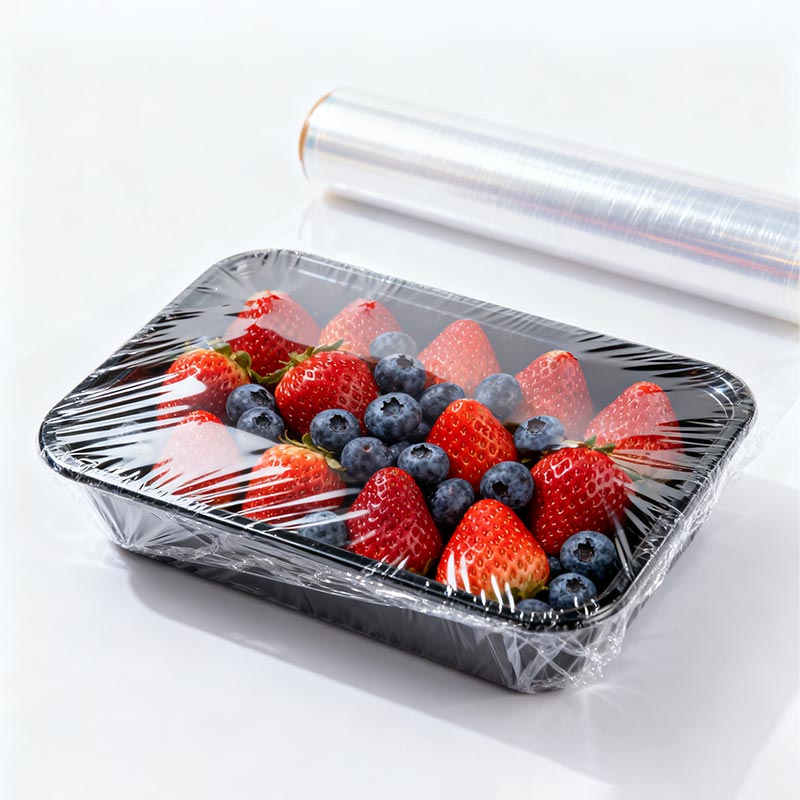

In commercial kitchens, Plastic wrap is used continuously throughout food preparation, storage, and service operations. When wrapping performance fails, the impact is immediate: food dries out, contamination risks increase, and operational efficiency drops. Understanding how to troubleshoot these problems is essential for kitchen managers and purchasing teams.
Drawing on manufacturing expertise and long-term application feedback from Dongguang County Donghui Heat Shrink Film Co., Ltd, this article explains how to identify common Plastic wrap failures, determine their root causes, and apply practical corrections that work in real commercial kitchen environments.
Troubleshooting Plastic wrap in commercial kitchens always begins with recognizing the early warning signs. Unlike residential kitchens, commercial operations rely on speed, consistency, and repeatable results. When Plastic wrap is not performing correctly, the problems tend to surface quickly and repeatedly throughout daily workflows. These signals are often dismissed as minor inconveniences, but they usually indicate deeper issues related to material selection, application technique, or storage conditions. Identifying these problems early allows kitchen teams to correct mistakes before food quality, safety compliance, and operating costs are affected.
Below are the most common problem signals that suggest Plastic wrap is being used incorrectly in a commercial kitchen environment.
One of the clearest signs of incorrect Plastic wrap usage is a seal that appears secure during application but loosens shortly after storage. This issue commonly appears when containers are moved into refrigeration or stacked during service prep.
Loose sealing usually indicates insufficient cling strength, uneven tension during application, or incompatibility between the wrap and container surface. In fast-paced kitchens, staff may stretch the film unevenly or apply minimal overlap, assuming the wrap will self-adjust. In reality, inconsistent sealing allows air to enter, accelerating food oxidation and dehydration.
Condensation buildup under Plastic wrap is often misunderstood. While some moisture is expected, excessive water droplets indicate incorrect handling rather than product failure. This problem commonly occurs when warm or freshly cooked food is wrapped immediately.
Trapped heat creates steam that condenses once the container cools, leaving pooled moisture that affects texture, flavor, and food safety. Over time, this environment promotes bacterial growth and reduces shelf life.
Frequent tearing is another strong signal that Plastic wrap is being used incorrectly or is not suitable for the task. In commercial kitchens, tearing often occurs during high-volume prep when speed is prioritized over controlled handling.
Tearing may result from excessive stretching, sharp container edges, or wrap thickness that does not match the food weight being covered. Thin films may perform well for light items but fail under heavier or irregular loads.
When food shows surface drying or discoloration despite being wrapped, the problem is often misattributed to storage duration. In reality, improper Plastic wrap sealing allows oxygen exposure, leading to moisture loss and oxidation.
This issue is particularly common with prepped vegetables, meats, and bakery items that rely on airtight storage. Even small gaps in the seal can significantly impact freshness over time.
Odor transfer is a subtle but critical warning sign. When Plastic wrap fails to act as an effective barrier, strong aromas migrate between stored foods, compromising flavor integrity.
This problem often points to high oxygen permeability or incomplete sealing. In shared refrigeration environments, odor transfer can quickly lead to product rejection and increased waste.
From a troubleshooting perspective, these signals should never be addressed in isolation. At Dongguang County Donghui Heat Shrink Film Co., Ltd, our factory evaluates these symptoms collectively to identify whether the root cause lies in material properties, application habits, or storage practices. Understanding these warning signs creates a clear starting point for effective Plastic wrap troubleshooting in any commercial kitchen.
When Plastic wrap fails to seal or cling as expected, the issue is rarely random. In commercial kitchens, repeated sealing failures usually point to specific mismatches between the wrap’s material properties and real-world usage conditions. Understanding why these failures occur is a critical step in effective troubleshooting. Rather than treating poor cling performance as a product defect, kitchen operators should evaluate how material formulation, thickness selection, temperature exposure, and application habits interact during daily operations. Each of these factors directly influences sealing reliability.
Not all Plastic wrap is designed for commercial environments. Some formulations prioritize low cost or general-purpose use, which may not deliver stable cling performance under constant handling, refrigeration, and stacking.
Wraps with insufficient cling additives struggle to maintain contact with container rims, especially in cold or humid conditions. As a result, seals that initially appear secure gradually loosen over time.
Thickness plays a decisive role in how Plastic wrap behaves during application. Thin films stretch easily, but excessive elongation reduces structural strength and weakens the seal. Thicker films offer better resistance but require controlled tension.
In commercial kitchens, a single thickness is often used for all tasks. This one-size approach leads to tearing on large containers and poor conformity on smaller items.
Temperature has a direct impact on Plastic wrap behavior. Cold environments stiffen the film, while heat increases elasticity but reduces immediate cling stability. Failure to account for temperature transitions often leads to sealing problems.
Wrapping warm food accelerates moisture formation, while moving freshly wrapped containers into refrigeration can cause film contraction. These changes weaken the seal if the wrap is not formulated for temperature variation.
Container material and rim design significantly affect sealing performance. Plastic wrap adheres differently to stainless steel, plastic, and composite surfaces. Irregular or wet rims further complicate cling behavior.
In busy kitchens, containers are often reused without proper drying, reducing surface friction and weakening adhesion. Even high-quality Plastic wrap cannot compensate for unsuitable surface conditions.
Improper handling magnifies material limitations. Uneven tension, minimal overlap, or rushed wrapping techniques reduce sealing reliability. These habits often develop in high-volume prep environments where speed takes priority.
Overstretching thins the film at stress points, while insufficient overlap leaves edges vulnerable to lifting. Both scenarios result in gradual seal failure rather than immediate detachment.
Some sealing failures are not visible immediately. Plastic wrap with high oxygen permeability allows gradual air exchange, which weakens internal pressure balance and accelerates food degradation.
Over time, this leads to drying, odor transfer, and seal relaxation. Kitchens storing prepped items for extended periods must prioritize barrier performance, not just initial cling.
From a troubleshooting standpoint, these causes often overlap rather than exist independently. At Dongguang County Donghui Heat Shrink Film Co., Ltd, our factory evaluates cling failures by reviewing material formulation, thickness choice, temperature exposure, and handling habits together. This holistic approach ensures Plastic wrap solutions align with real commercial kitchen conditions rather than theoretical specifications.
Once problem symptoms and possible causes have been identified, effective troubleshooting requires a structured diagnostic process. In commercial kitchens, replacing Plastic wrap without diagnosis often leads to repeated failures, unnecessary cost, and inconsistent results. A step-by-step approach allows kitchen teams to isolate the true source of wrapping issues, whether they originate from handling habits, environmental conditions, or product specifications. The following diagnostic framework is designed to be practical, repeatable, and easy to apply during daily operations.
The first diagnostic step is verifying the temperature of food at the time of wrapping. Many sealing problems originate before the wrap even touches the container.
Wrapping food that is still warm generates internal steam. As the container cools, this moisture condenses under the film, weakening cling performance and creating an unstable seal.
If condensation appears quickly, the issue is handling-related rather than a material defect.
Next, assess how Plastic wrap is being stretched during application. Excessive tension thins the film and reduces its ability to maintain long-term cling.
In fast-paced prep environments, staff often overstretch the wrap to save time or reduce material use. This creates weak zones that fail under refrigeration or stacking pressure.
If seals fail only after handling, tension control is likely the primary issue.
Plastic wrap performance depends heavily on container surfaces. This step involves examining rim material, cleanliness, and moisture level.
Wet, oily, or irregular rims prevent consistent adhesion. Even high-quality wrap cannot compensate for unsuitable surface conditions.
If wrap adheres well to some containers but not others, surface compatibility is the root cause.
Storage conditions reveal issues that are not visible immediately after wrapping. Cold environments change film elasticity and cling behavior.
After placing wrapped items into refrigeration, allow sufficient time to evaluate seal stability. Premature inspection may miss delayed failures.
If failure occurs only after cooling, temperature resistance or formulation may need adjustment.
If handling and environmental factors are ruled out, review the Plastic wrap’s technical parameters. Thickness, elongation rate, and cling formulation determine how the wrap behaves under stress.
Using a single specification for all kitchen tasks often leads to compromise performance. Heavier items and long storage durations require stronger material support.
At this stage, specification mismatch is often the primary cause.
Finally, determine whether the issue is consistent across different team members and work periods. Inconsistent results often indicate training gaps rather than product limitations.
Standardizing wrapping procedures reduces variability and simplifies troubleshooting.
From a manufacturing and application standpoint, Dongguang County Donghui Heat Shrink Film Co., Ltd emphasizes diagnosing issues through this structured process. Our factory supports commercial kitchens by aligning Plastic wrap specifications with real operational behavior, reducing repeated failures and improving long-term reliability.
After identifying problem symptoms, understanding root causes, and applying step-by-step diagnosis, the final stage of troubleshooting focuses on prevention. In commercial kitchens, repeated Plastic wrap failures are often the result of selecting products without fully considering performance parameters. Product specifications determine whether Plastic wrap performs consistently under daily pressure. When parameters align with real usage conditions, many common problems never occur. This section explains which parameters matter most and how they directly influence long-term wrapping reliability.
Thickness is one of the most visible and influential parameters. However, consistency across the entire roll is more important than the nominal micron value alone.
Inconsistent thickness creates weak points that tear under tension or lose cling during storage. Commercial kitchens rely on uniform performance from the first wrap to the last.
Elongation describes how much Plastic wrap stretches before breaking. Excessive elongation encourages overstretching, while low elongation limits conformity.
Balanced elongation allows the film to stretch smoothly without thinning excessively at stress points. This reduces the risk of seal failure caused by uneven application.
Initial cling performance is easy to observe, but long-term cling stability is what prevents failures during storage. Plastic wrap must maintain adhesion even as temperature and humidity change.
Wraps with unstable cling formulations often appear effective at first but gradually lose sealing strength in refrigeration.
Commercial kitchens routinely move wrapped items between prep areas, refrigeration, and freezing. Plastic wrap must tolerate these transitions without losing elasticity or cling.
Insufficient temperature tolerance leads to film contraction, brittleness, or moisture interference.
Barrier performance determines how effectively Plastic wrap limits oxygen and moisture exchange. High permeability accelerates drying, oxidation, and odor transfer.
Kitchens storing prepped food for extended periods benefit significantly from improved barrier control.
Operational efficiency is also influenced by roll length, core size, and compatibility with dispensers. Poor fit encourages uneven tension and handling shortcuts.
Wraps designed for standard dispensers support controlled application and reduce waste.
From a preventive troubleshooting perspective, Dongguang County Donghui Heat Shrink Film Co., Ltd focuses on aligning these parameters with real commercial kitchen demands. Our factory works closely with clients to ensure Plastic wrap specifications support consistent results, reducing the need for repeated adjustments and operational disruptions.
Knowing how to troubleshoot Plastic wrap mistakes in commercial kitchens requires recognizing failure symptoms, identifying root causes, and applying targeted corrections. A structured diagnostic approach helps kitchens solve problems quickly without unnecessary product changes. With extensive production experience, Dongguang County Donghui Heat Shrink Film Co., Ltd supports professional kitchens through application-focused design and consistent material quality. Our factory-driven solutions help reduce waste, improve food safety, and stabilize daily operations.
For commercial kitchens seeking dependable performance and reduced operational risk, selecting the right Plastic wrap partner is essential. Contact our team to discuss customized solutions designed to improve efficiency, food safety, and long-term cost control.
Why does plastic wrap lose its seal after refrigeration?
Plastic wrap often loses its seal in cold storage due to reduced elasticity, insufficient cling formulation, or moisture interference. Reviewing temperature tolerance and ensuring food is cooled before wrapping helps maintain seal stability.
How can condensation under plastic wrap be prevented in commercial kitchens?
Condensation can be minimized by allowing food to cool fully before wrapping and selecting wrap with balanced moisture control properties. Proper handling reduces steam formation that weakens cling.
What causes plastic wrap to tear during high volume food preparation?
Tearing is typically caused by excessive stretching, thin film selection, or sharp container edges. Choosing appropriate thickness and controlling application tension improves durability.
How do product specifications affect long term plastic wrap performance?
Specifications such as thickness consistency, elongation rate, cling stability, and barrier properties determine whether plastic wrap maintains reliable sealing over repeated storage cycles.
When should a commercial kitchen consider changing plastic wrap specifications?
Specification changes should be considered when troubleshooting confirms that handling and environmental factors are controlled, but sealing issues persist under normal operating conditions.